
The Definitive Guide To Lowering Your Student Loan Payment

With the cost of tuition constantly going up these days, it is a rarity that I speak to a recent graduate who is not in student loan debt of some kind.
In fact, the most recent statistics show that over 70% of all college seniors have found themselves in student loan debt upon their graduation date.
In 2014, the average debt accumulated by these graduates is estimated to reach $30,000 per borrower; for some private colleges, it is about that per school year!
That means the average cost for just one four-year degree will be $132,000.
- At the time these graduates took out these student loans, did they know what they were signing up for?
- Did they know what their rates were going to be and if their lender could change those rates without their knowledge?
- Did they know who their lenders even were?
- Did they know if the loans were federally backed or privately backed and what the difference was?
- And most importantly, did they know what their options were after graduation?
For most graduates the answer to these questions, along with many more, is a resounding NO.
The reality is the majority of these graduates are blind and completely uneducated when it comes to their student loans; and this isn’t because they are dumb or simply do not care.
They were simply never told how to pay off student loans…
So it is no surprise when I hear that these graduates fall behind on their payments, go into default, or more commonly, continue to make higher payments every month while the balance seems to stay motionless.
To make sure that you can get the lowest payment possible and that you are not getting ripped off by student loan servicers (Sallie Mae/Navient, anyone?), you need to know a few basic tricks and ensure you are in the most beneficial student loan situation for your specific needs.
And because student loans are usually a pretty large piece of a person’s overall debt, having your student loans squared away can really take some financial weight off your shoulders.
After speaking to more than 25,000 graduates struggling with high monthly payments everyday, we have compiled a list of the 9 most useful pieces of information that we share with our clients for lowering their student loan payments.
Here are 9 tips to lowering your student loan payment:
1. Know the kinds of loans you have
There are so many different kinds of loans out there that it can be pretty overwhelming and confusing to sort them out.
By using the National Student Loan Data System (NSLDS) and your FAFSA pin, you will be able to look at every single kind of federal student loan that you have.
It is important to know what kinds of loans you have because different repayment options are often based around this information as well as the origination date of the loan.
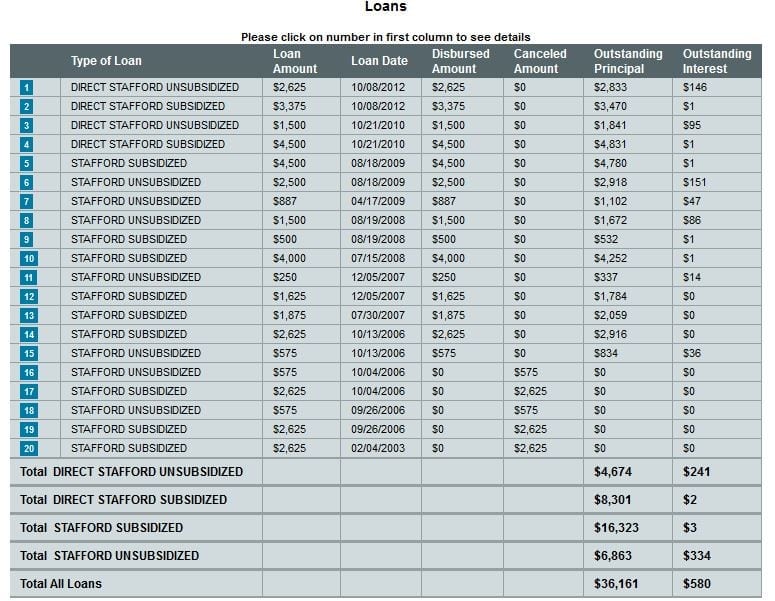
Be sure to double check the statements you are receiving and the amounts of the loans.
If you have looked at your overall principal on your statement and it differs from what you see on the NSLDS, chances are you have private loans too.
In this case, you may need to contact your lender of the loan or your financial aid office to find out exactly what kind of private loans you have.
2. Stay in touch with your lender or your loan representative
It may sound strange, but some kinds of lenders will never contact you in regards to collecting payment.
This does not mean that you are free to go- even though that is what we would all hope for! Those lenders are almost hoping that you run late and fall into default.
Why?
Because those lenders are backed by the federal government and they will get paid back on that loan one way or another.
In fact, if you do happen to fall into default, not only will they be paid back by you (the borrower), but through interest, regular payments, and being paid back by the government, those lenders will receive about 3x’s the amount of your original balance.
Does that seem right?
Probably not…so whenever you have a change in your financial situation, contact information, or you anything else pertaining to your loans, give your lender or representative a call and let them know.
When you do this, ask them any pending questions you may have and reconfirm some of the basics you have already established with them.
Never assume that they will contact you to keep you in the loop!
(Bonus Tip: Want even more of these tips to lower a payment? Own all these 9 tips and more in the newest and extended version of this guide below. We break down all 9 tips even further so you know the best ways you can obtain a more affordable payment FAST. Learn more and get the download here for free.)
3. Know your student loan repayment options and fully educate yourself about them
There are several different kinds of repayment options and programs available for students.
Not only were they invented to keep you on track to pay off the loan but by finding the right program for you, they can help alleviate the struggle of a high payment. While the repayment programs are there to benefit students, they can be confusing to understand and therefore are underutilized.
If you do not feel confident in sorting through the confusion by yourself, your lenders are supposed to be there to help you.
However, as I mentioned earlier, some lenders are not particularly helpful. It’s a good idea to get professional help if you want to find out more about repayment programs or if you are experiencing the aforementioned “un-helpful helpers”.
4. Find out if you can qualify for a forgiveness program.
Some of the programs available to students also offer Student Loan Forgiveness.
As forgiveness programs are mainly based off of the type of loan, the origination date, your occupation, and your income these too can get confusing. Be sure to consult with your lender or representative to ask questions about obtaining forgiveness.
This is where knowing the types of loans that you have accumulated will really come in handy.
If you are unsure of the next steps to take to acquire forgiveness, you can speak to a student loan representative, who can help you out with a free audit of your loans.
5. Find out what consolidating your student loans can do for you.
A consolidation is taking the accumulation of all your student loans and bringing them together to make one new loan, with one new, fixed interest rate.
You must be careful if you have both private and federal student loans when consolidating.
You probably do not want to consolidate your federal loans into a private loan for the reason that you would lose any deferments or forbearances you might have left in your loan term.
If you only have federal loans then there are several factors you will want to take a look at before moving forward with a consolidation.
While a consolidation can open up a range of benefits for you, every situation is different, so you will want to get the facts and consult an expert to find out how a consolidation can help you.
6. Be aware of your grace period and when it ends
After you graduate, usually you are given about six to nine months “grace” with federal loans in order to find yourself a job and some financial stability.
The grace period for private loans varies, so you will want to contact your lender and take note of important dates.
Many times student loan companies will contact you immediately following graduation to try to collect your payment.
Make sure you check the status of your loans by logging into the NSLDS.
It can show you if you are still in grace period, default, or in repayment.
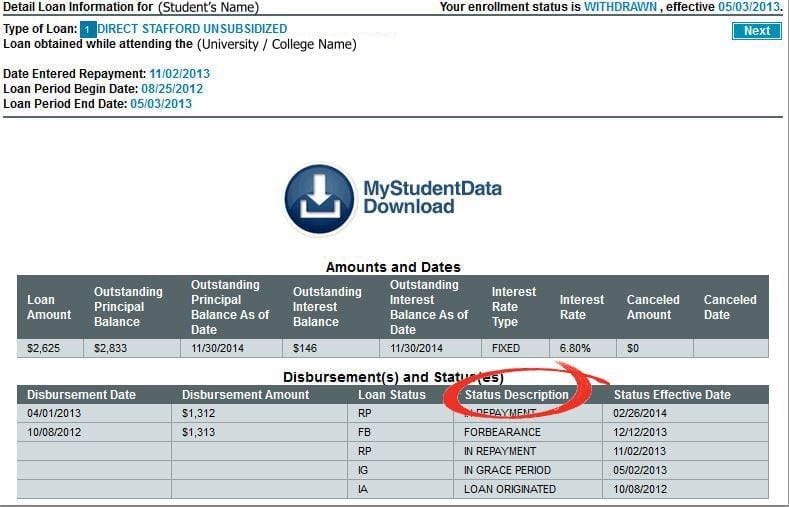
If the system shows that you are in grace period and your lenders are asking you for payments, you may wish to bring this up to them or contact a loan representative if you have one.
You also need to be aware of when your grace period ends.
This is very important, as you don’t want to miss your first payment date and start off on a bad foot.
Which leads us to my next tip…
(Bonus Tip: Want even more of these tips to lower a payment? Own all these 9 tips and more in the newest and extended version of this guide below. We break down all 9 tips even further so you know the best ways you can obtain a more affordable payment FAST. Learn more and get the download here for free.)
7. Do not miss your payments
Running late on your student loan payments not only leads to a damaged credit score, but it can also result in a defaulted status on those loans that are late.
Once the loans are in a default status it becomes very difficult for lenders and the US Department of Education to work with you as far as coming up with an affordable repayment program or sometimes even consolidating those loans.
It’s almost as if you have lost the Department of Education’s trust at this point and until you can prove to them that you are a capable, payment-making citizen again, you are put into a dicey and questionable collections period.
If you continue to avoid paying on your loans throughout default status the government will come after you through your employer and your taxes.
The Department of Education can garnish up to 15% of your wages or collect your tax refunds, leaving you with little options.
Please, do yourself a favor and do not let it get to this.
As you can see, not making some kind of payment towards your student loans creates a long snowball effect to a huge financial mistake.
8. Learn how taxes can impact your student loans
Not only could there be tax breaks available to graduates with student loans, but income taxes are also factored in when qualifying for certain repayment programs, such as the Income Based Repayment Program (IBR).
As it is one of the repayment options that offer student loan forgiveness to graduates, the IBR program looks at a graduate’s household income.
Moreover, if you default on your student loans, the government can keep tax refund to pay for the defaulted student loans.
To read more about how to stop student loans from taking your taxes read this.
For this reason and if applicable, a graduate may want to look into filing their taxes separately from their spouse.
Note that making the change to file your taxes separately can affect other areas of your finances, so you will want to make this decision carefully and even get with your accountant if you need to.
9. If you can afford to pay extra, do it
Putting more money towards your loans each month can help to directly attack the principal.
Since each monthly payment covers any fees you might have accumulated and also the interest, only a little each month is going towards actually bringing down your principal balance.
Most of the federal loan repayment programs offer a no pre-payment penalty.
Meaning that anything extra that you pay each month will go towards the principal.
Whether you are able to do this every single month or just a little here and there, it is a good idea to get a written statement saying that the extra amount that you put down each month is to be applied to the principal- not your future payments!
The essential understanding about the above tip is the “if you can afford to” part.
Yes, paying off your student loans is extremely important, but you shouldn’t put everything you own and have into paying them off quickly.
This can hurt you in other areas of your life; from your long run financial stability to even your emotional health.
However, when all of these 9 tips are followed to lower your student loan payment, you can find that both your long run finances and your happiness will both improve.
(Bonus Tip: Want even more of these tips to lower a payment? Own all these 9 tips and more in the newest and extended version of this guide below. We break down all 9 tips even further so you know the best ways you can obtain a more affordable payment FAST. Learn more and get the download here for free.)
Still need some help with your student loans?
That’s OK.
We get it, they’re confusing (and pretty annoying)!
That’s why we’re here- to help you out with any questions you may have and try to lower your payments along the way. Download the extended and updated version of this post for free, here or simply give us a call at 1-813-775-2058